November 18, 2026
FILM: THE LAST CRITIC
DIRECTED BY: MATTY WISHNOW
RATING: 3 ½ out of 4 stars
By Dan Pal
I bought a lot of books on music when I was very young. Some were about various years in music and others were focused on my obsession with the Billboard charts. Then there were others written by music journalists like Robert Christgau, who became known for his writings back in 1967. The new documentary, The Last Critic, presents a portrait of Christgau, his history, writings, and evolution over the past sixty years. Rather than sequencing it as a strict linear biography, director Matty Wishnow interviews Christgau in his natural habitat today and moves us in and out of his historic past, creating a fascinating and well-rounded look at the influential man and his work.
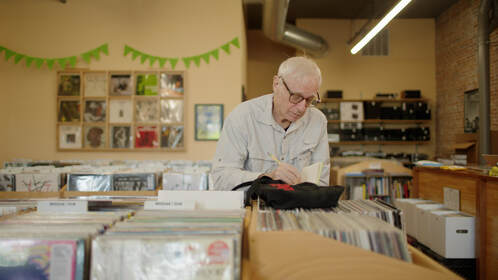
When we first meet Christgau, he is in his New York apartment which is filled with rows and shelves of CDs, books, vinyl records, and cassettes. These overpower the space and his own small desk where he continues writing today. Is he a hoarder? No. He’s dedicated to his craft and has quick to find resources at his disposal for anything he creates. Personally, I find it inspiring, being at the point where I’ve also been considering what needs to stay and what needs to go from my own collections of all of the above. Now in his 80s, Christgau does wonder what he will do with all of it before he passes but for now, he seems perfectly ensconced in his world.
Christgau became known during his time as music editor of the Village Voice. He wrote a regular column called the Consumer Guide in which he’d use his now famous A to E system to rate albums. His process is as precise as it is open-ended. One of my favorite scenes in the film is when Wishnow flashes on the screen a series of albums Christgau rated in every category from A to A-, B+, B, etc. Some of the titles he gave extremely low grades to such as Barbra Streisand’s 1976 soundtrack album to A Star is Born and Billy Joel’s early album containing his now classic Piano Man, might make fans balk today. But Christgau’s rating system is as subjective as any critic’s. He explains it with a few chuckles along the way. He’s committed but also has an entertaining sense of humor about all of it.
What makes The Last Critic also a very special documentary are the interviews with various writers such as Colson Whitehead, Ann Powers, and Rob Sheffield. They all sing the praises of Christgau while also setting up the context for his writings on a host of artists, genres, and recordings. The film features some of his evaluations of everyone from Joni Mitchell to Lil Wayne and Taylor Swift. It also explores his dislike of depressing male rock, heavy metal, and progressive rock genres.
There is also plenty of old television footage of Christgau and the various interviews he has given over time. We also see him walking around the East Village in New York with his loving wife of several decades, perfectly content with his present life.
The film is less a biography and more a look at this celebrated but humble man’s writing style, likes and dislikes. Some call him the “Dean” of American rock critics and I can see why. His work has influenced generations and he continues to explore new music. His story is worth checking out for any music fan of the past half century.
The Last Critic is playing as part of DOC NYC. It is available to be streamed via the festival’s website through November 29th. For information on how to purchase tickets to do so, go to https://www.docnyc.net/film/the-last-critic/.