June 11, 2026
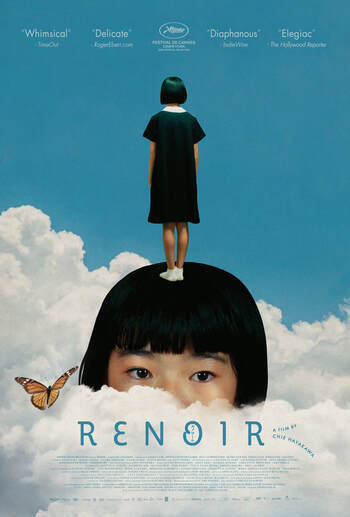
FILM: RENOIR
WRITTEN & DIRECTED BY: CHIE HAYAKAWA
STARRING: YUI SUZUKI, LILY FRANKY, HIKARI ISHIDA
RATING: 3 ½ out of 4 stars
By Dan Pal
First off, if you’re thinking this is a film about painter Pierre-Auguste Renoir, you’d be in for a surprise. In fact, Renoir is only mentioned in the film related to one of his works, Little Irene, which writer/director Chie Hayakawa had a reproduction of when she was a child. The film is very loosely based on the period in her life, in 1987, when her father was given a terminal cancer diagnosis. Yui Suzuki plays eleven-year-old Fuki, an unafraid, imaginative, adventurous child. The story that surrounds her is about grief, loneliness, and finding oneself during a challenging time in a young person’s life.
The first scene features Fuki watching a videocassette of several children crying (not something we’d expect from an eleven-year-old) yet she remains emotionless. She is trying to understand grief and sadness. Her own mother doesn’t exhibit any outside emotions and comes across as more pre-occupied and in preparation mode for her husband’s eventual death than sad.
Fuki spends much of her time alone. She is learning English and writes stories and essays. She writes one called “I’d Like to be an Orphan” which is clearly telling about her relationship with her parents. She also becomes quite fascinated by psychic powers, spells, and hypnosis. She tries learning to read other people’s minds. Fuki’s search for different modes of communication and solving problems reflects wider issues in the suburban Tokyo culture where she lives. Throughout the film she meets or sees an array of people who are searching for something outside themselves to overcome their loneliness. This includes a phone number she finds which features messages from people looking for some companionship. The film also illustrates people turning to fortune tellers and, in the case of her father, searching for cancer research and miracle cures for his dire illness.
All the while, Fuki remains forever the adventurer, in at least one case being naïve as to what could result from one of her quests. However, she is, like everyone else living in solitude. She is losing people around her and yet doesn’t completely understand how other people deal with the grief associated with their losses. At one point, a woman entering a hospital where Fuki and her mother are waiting is wailing from deep emotional pain due to what appears to be the death of her son. Fuki has yet to experience such an outward expression of pain herself and watches her a bit perplexed at this dramatic display of emotion.
The film is effectively shot and well-acted, especially by the Yui Suzuki as Fuki. Gradually through the film we see moments of joy and happiness in the character who initially comes across as affectless. But Fuki is finding her own way toward the lighter side of life and maybe eventually a life which is more emotionally rich.
The languid pacing of the film may be a bit of a turn off for some but I felt the storytelling was increasingly layered and the connections made about how people grieve and deal with loneliness to be quite enlightening and well-developed.
Renoir is currently playing in limited theatrical release. It opens this week at the Gene Siskel Center in Chicago.
FILM: RENOIR
WRITTEN & DIRECTED BY: CHIE HAYAKAWA
STARRING: YUI SUZUKI, LILY FRANKY, HIKARI ISHIDA
RATING: 3 ½ out of 4 stars
By Dan Pal
First off, if you’re thinking this is a film about painter Pierre-Auguste Renoir, you’d be in for a surprise. In fact, Renoir is only mentioned in the film related to one of his works, Little Irene, which writer/director Chie Hayakawa had a reproduction of when she was a child. The film is very loosely based on the period in her life, in 1987, when her father was given a terminal cancer diagnosis. Yui Suzuki plays eleven-year-old Fuki, an unafraid, imaginative, adventurous child. The story that surrounds her is about grief, loneliness, and finding oneself during a challenging time in a young person’s life.
The first scene features Fuki watching a videocassette of several children crying (not something we’d expect from an eleven-year-old) yet she remains emotionless. She is trying to understand grief and sadness. Her own mother doesn’t exhibit any outside emotions and comes across as more pre-occupied and in preparation mode for her husband’s eventual death than sad.
Fuki spends much of her time alone. She is learning English and writes stories and essays. She writes one called “I’d Like to be an Orphan” which is clearly telling about her relationship with her parents. She also becomes quite fascinated by psychic powers, spells, and hypnosis. She tries learning to read other people’s minds. Fuki’s search for different modes of communication and solving problems reflects wider issues in the suburban Tokyo culture where she lives. Throughout the film she meets or sees an array of people who are searching for something outside themselves to overcome their loneliness. This includes a phone number she finds which features messages from people looking for some companionship. The film also illustrates people turning to fortune tellers and, in the case of her father, searching for cancer research and miracle cures for his dire illness.
All the while, Fuki remains forever the adventurer, in at least one case being naïve as to what could result from one of her quests. However, she is, like everyone else living in solitude. She is losing people around her and yet doesn’t completely understand how other people deal with the grief associated with their losses. At one point, a woman entering a hospital where Fuki and her mother are waiting is wailing from deep emotional pain due to what appears to be the death of her son. Fuki has yet to experience such an outward expression of pain herself and watches her a bit perplexed at this dramatic display of emotion.
The film is effectively shot and well-acted, especially by the Yui Suzuki as Fuki. Gradually through the film we see moments of joy and happiness in the character who initially comes across as affectless. But Fuki is finding her own way toward the lighter side of life and maybe eventually a life which is more emotionally rich.
The languid pacing of the film may be a bit of a turn off for some but I felt the storytelling was increasingly layered and the connections made about how people grieve and deal with loneliness to be quite enlightening and well-developed.
Renoir is currently playing in limited theatrical release. It opens this week at the Gene Siskel Center in Chicago.